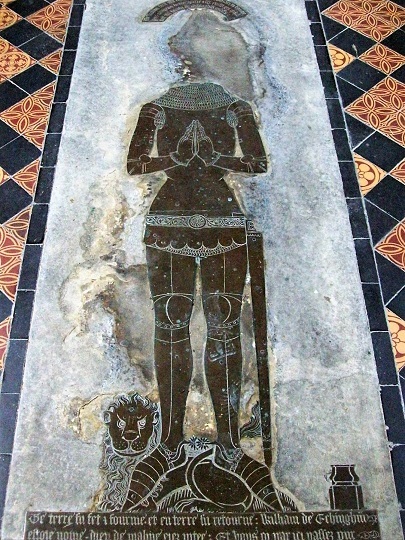
The Church of the Assumption and St Nicholas at Etchingham (the village next door to Kipling's Burwash) was built by William de Etchingham- who established a college of priests there to pray for his soul. His brass occupies the prime position in front of the high altar. Sadly, someone has made off with his head.
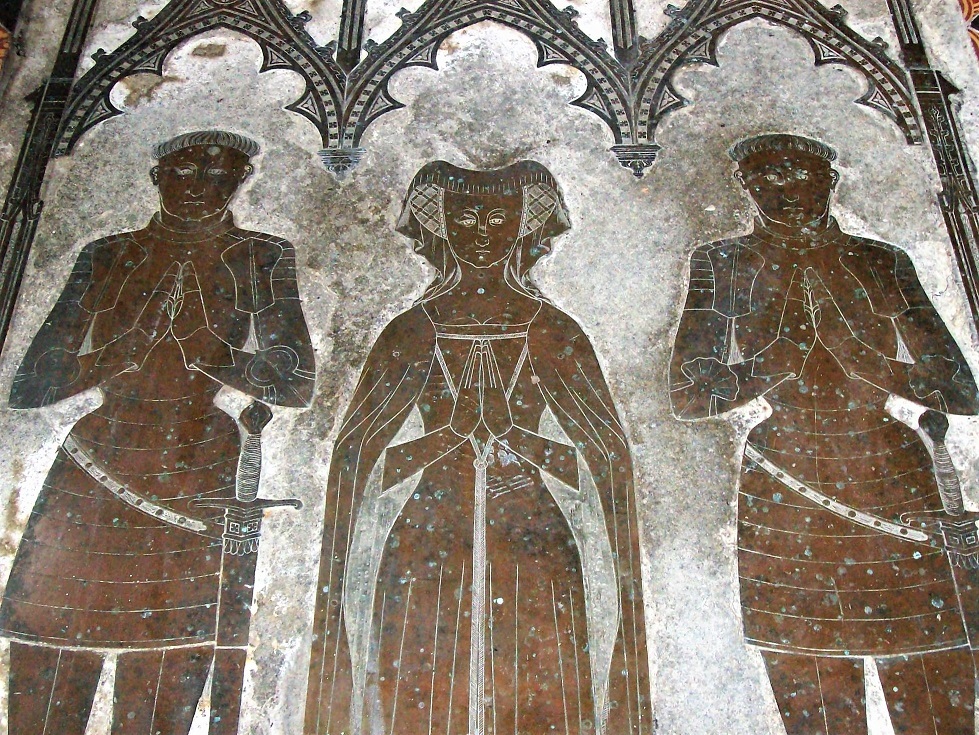
Members of the next generation- mother father and son- lie behind him. The English nobility of the mid-14th century didn't bother with portraits- and whoever commissioned the monument must have asked the craftsman for "one female figure and two male ones- all in the latest fashions of course" and clearly didn't mind that the two men turned out as similar as Tweedle-dum and Tweedle-dee. I've looked for differences and the only one I can find is in the design of the piece of plate armour that guards the crook of the elbow. Were brasses made to order or bought off the peg? I don't suppose anyone knows.
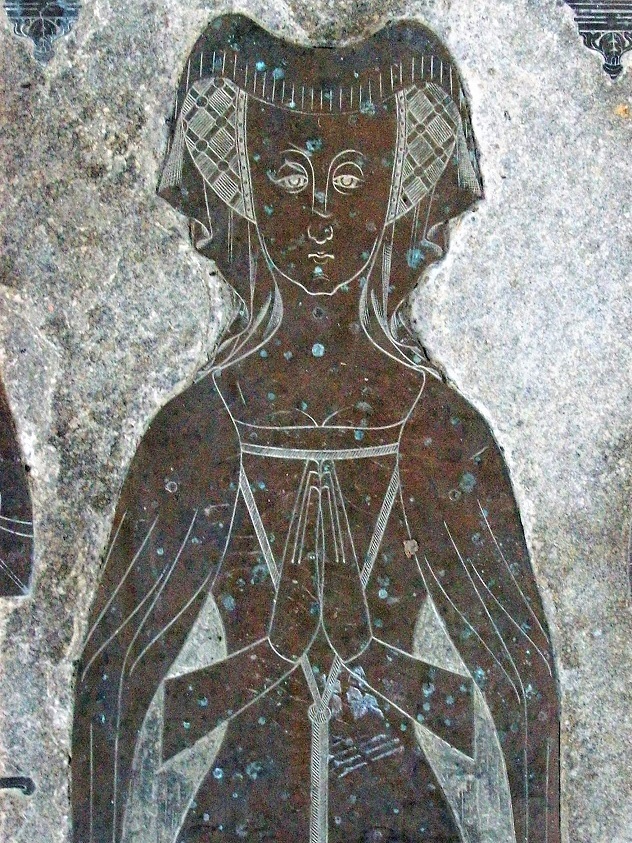
The third brass is a puzzle. We've moved on a generation and these are Elizabeth Echyngham and Agnes Oxenbridge.
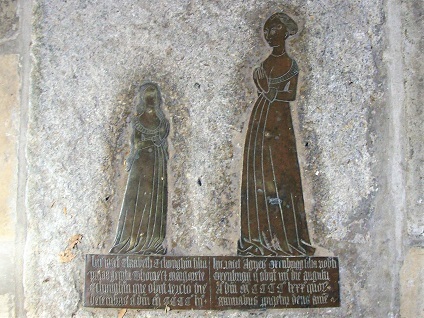
Why the difference in height? Why are two women who don't appear to be related buried together? At this point I hand over to whoever wrote the notes about them on the Sussex Churches Website...
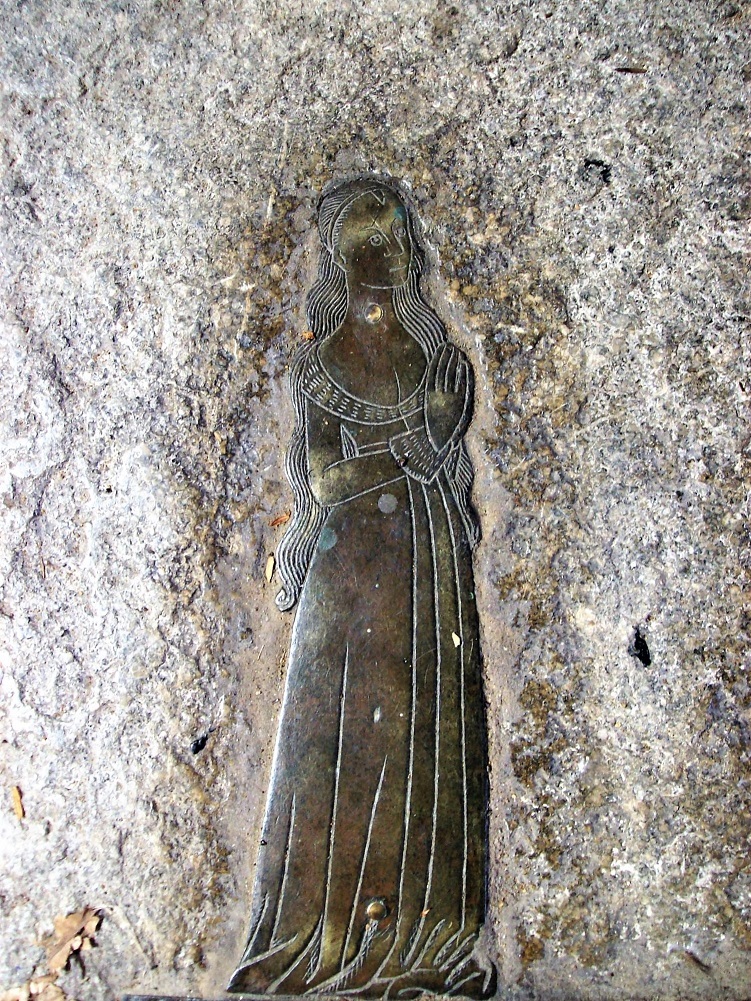
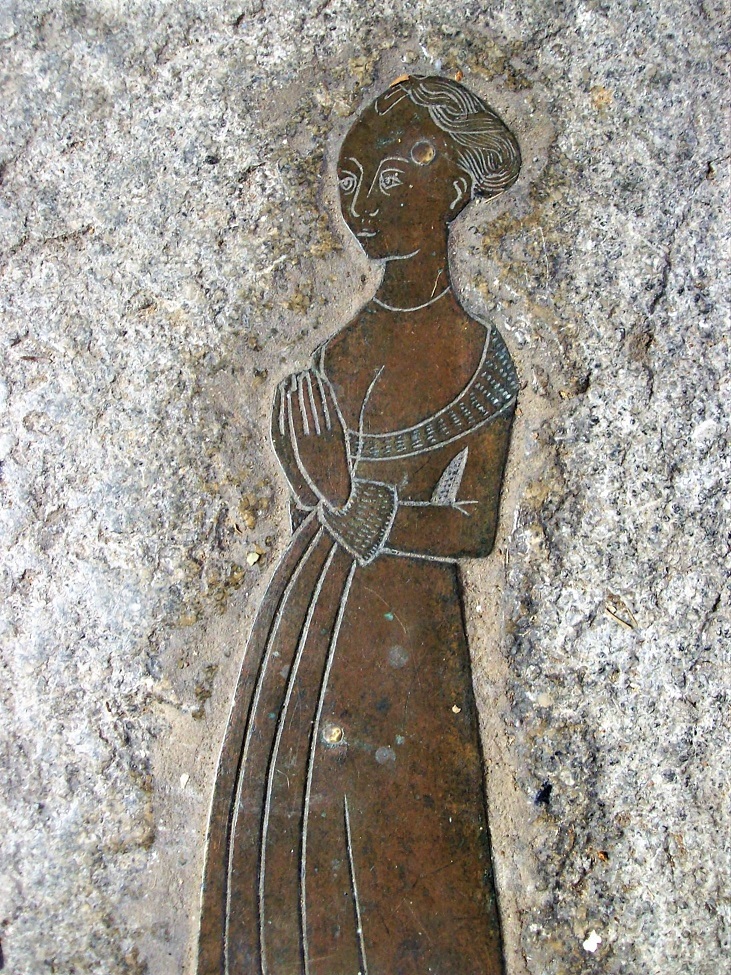
"The relationship between the two has been extensively discussed in recent studies (see 2 and 3), which cast much interesting though necessarily speculative light on late mediaeval sexuality. Agnes, though she died much later may be the older, for Elizabeth’s hair is shown loose and Agnes’s effigy is considerably larger. However, both are thought to have been born in the 1420s. Unusually they are shown half-turned and looking into each other’s eyes. Whatever the nature of their relationship, it is striking that Agnes is commemorated at Etchingham and not at Brede church in the Oxenbridge chapel, as might have been expected. It is also an indication of a perhaps unexpectedly tolerant society that such a memorial should have been carried out by Agnes’s executors."
![[personal profile]](https://www.dreamwidth.org/img/silk/identity/user.png)

