Archdeacon Sponne- Before And After
Jun. 11th, 2019 09:27 am![[personal profile]](https://www.dreamwidth.org/img/silk/identity/user.png) poliphilo
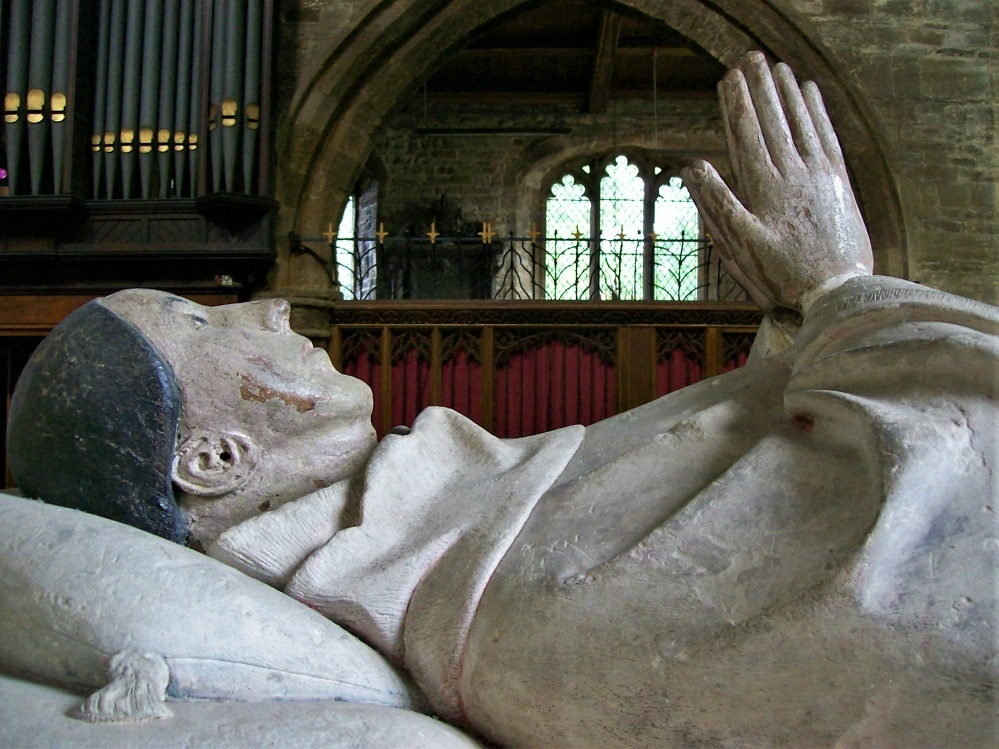
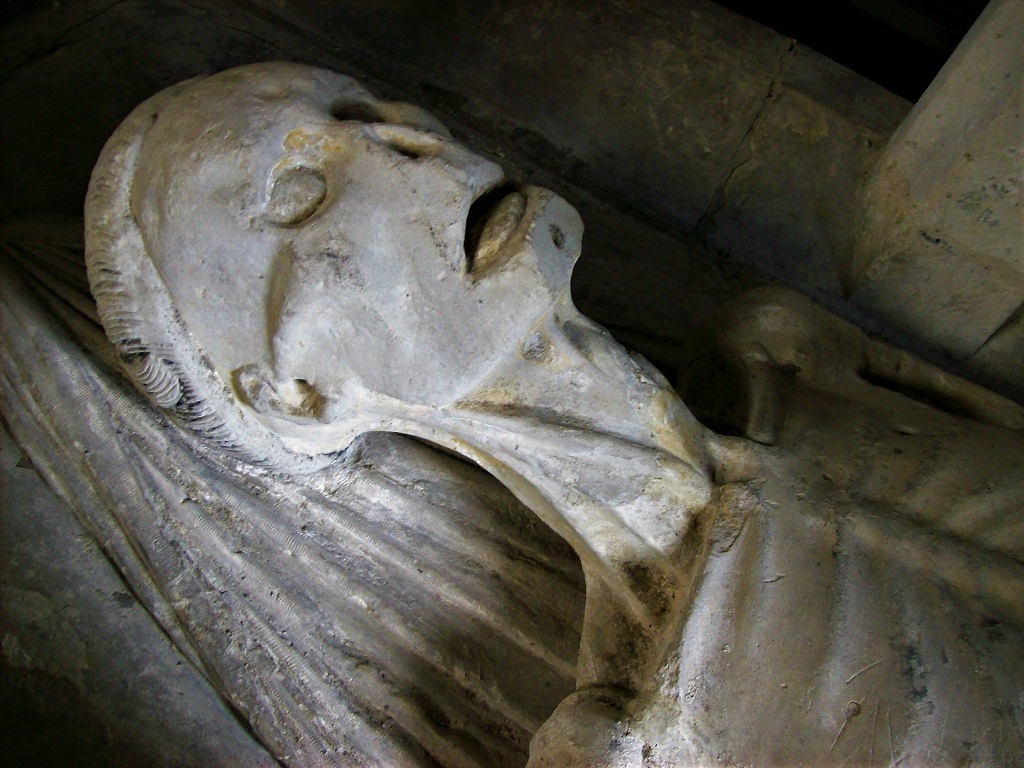
poliphiloCadaver tombs- otherwise known as transi tombs- were a fashion of the 15th century- a celebrity "must-have" in an age before yachts. Monarchs had them, great nobles had them, archbishops had them and Archdeacon Sponne thought he'd like one too. It's unusual to find one in a church as relatively modest as St Lawrence, Towcester.
(Is it pronounced "spon" or "spoon"? I do hope it's the latter.)
The deceased shares a bunk bed with his or her own decomposing corpse. The corpse has the bottom tier. If you tried to put one in a church today the ecclesiastical authorities would say it was in outrageously bad taste and forbid it.
I think they're fabulous (the tombs not the ecclesiastical authorities).
Sponne was a local good egg. He must have been alarmingly rich. He also gave his home town its grammar school. He died in 1448.
The effigies are made of a chalky stone called clunch- which is easy to carve. Sponne's head and hands are made of wood; they went missing in the 1880s but turned up again a hundred years later in a box in the vicarage attic.
The effigy has been repainted several times. A drawing of 1801 shows Sponne's vestments as black, whereas in 2006 they were reported to be red. In the 1980s someone who didn't know what they were doing went over him with Humbrol enamels- more commonly used for painting model aeroplanes. This will have been his red phase, I think. His present stripped back state is presumably the result of the restoration work that this necessitated.

(Is it pronounced "spon" or "spoon"? I do hope it's the latter.)
The deceased shares a bunk bed with his or her own decomposing corpse. The corpse has the bottom tier. If you tried to put one in a church today the ecclesiastical authorities would say it was in outrageously bad taste and forbid it.
I think they're fabulous (the tombs not the ecclesiastical authorities).
Sponne was a local good egg. He must have been alarmingly rich. He also gave his home town its grammar school. He died in 1448.
The effigies are made of a chalky stone called clunch- which is easy to carve. Sponne's head and hands are made of wood; they went missing in the 1880s but turned up again a hundred years later in a box in the vicarage attic.
The effigy has been repainted several times. A drawing of 1801 shows Sponne's vestments as black, whereas in 2006 they were reported to be red. In the 1980s someone who didn't know what they were doing went over him with Humbrol enamels- more commonly used for painting model aeroplanes. This will have been his red phase, I think. His present stripped back state is presumably the result of the restoration work that this necessitated.


no subject
Date: 2019-06-11 11:39 am (UTC)no subject
Date: 2019-06-11 12:23 pm (UTC)no subject
Date: 2019-06-12 01:06 am (UTC)Do you have any idea why his head and hands were made of wood?
no subject
Date: 2019-06-12 07:56 am (UTC)no subject
Date: 2019-06-12 11:00 pm (UTC)