Sinking The Tirpitz
Dec. 12th, 2007 10:14 am![[personal profile]](https://www.dreamwidth.org/img/silk/identity/user.png) poliphilo
poliphiloOur friend John was persuaded to talk about his naval service yesterday. (Actually we didn't know he'd been in the war- we didn't think he was that old) and he mumbled something about "D" day and the Tirpitz, then hurried on to the training he did after being demobbed. Isn't that marvellous? I don't really buy into all that "greatest generation" guff but I love it when a man who was involved in two of the legendary campaigns of the Second World War would rather talk about almost anything else.
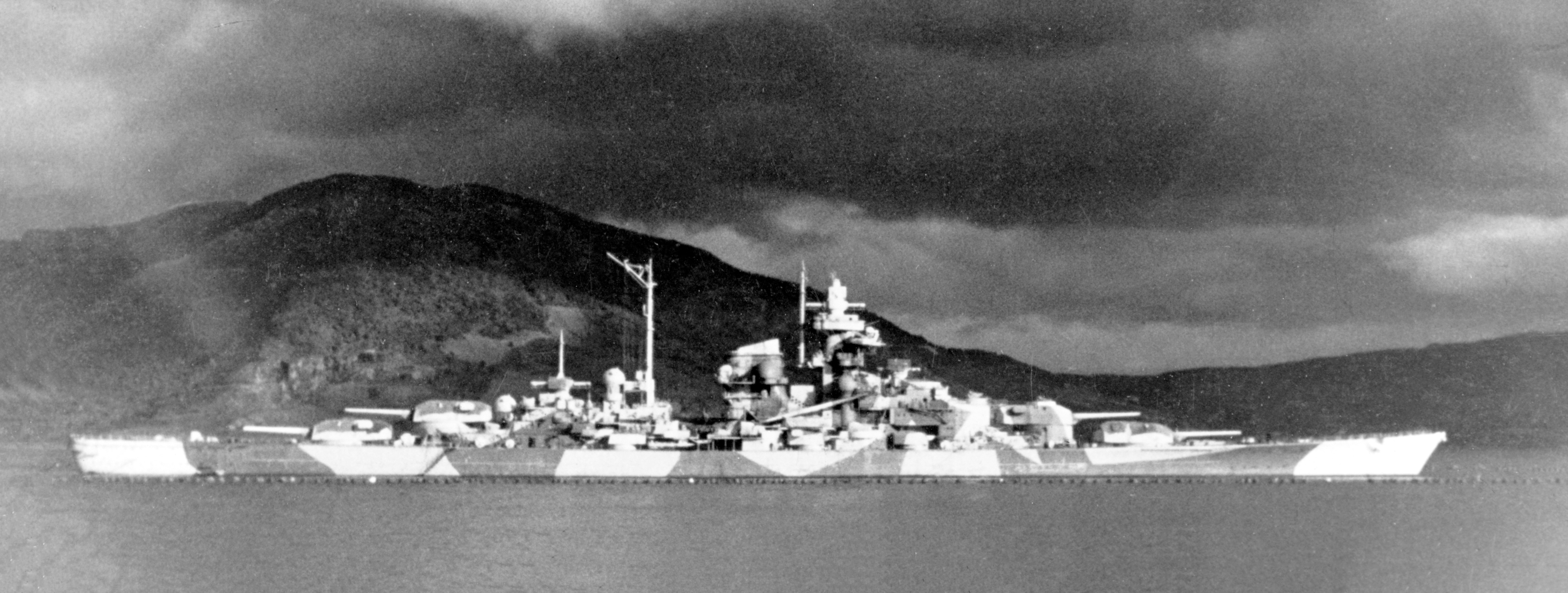
The Tirpitz was the biggest German battleship of World War II. She spent the war holed up in Norwegian ports and- in spite of never actually firing a shot in anger- hobbled the Royal Navy by compelling it to maintain a strong defensive presence in the North Sea. The British sank her- after many attempts- in November 1944. Nearly a thousand men went down with her.
The Tirpitz was the biggest German battleship of World War II. She spent the war holed up in Norwegian ports and- in spite of never actually firing a shot in anger- hobbled the Royal Navy by compelling it to maintain a strong defensive presence in the North Sea. The British sank her- after many attempts- in November 1944. Nearly a thousand men went down with her.


![[identity profile]](https://www.dreamwidth.org/img/silk/identity/openid.png)
no subject
Date: 2007-12-12 01:01 pm (UTC)no subject
Date: 2007-12-12 01:21 pm (UTC)It's something that makes me proud.
no subject
Date: 2007-12-12 01:45 pm (UTC)Is it just an inherent difference between that generation and later ones who seem addicted to confessional culture, or something particular to World War II that makes so many who participated in it so reluctant to discuss it?
no subject
Date: 2007-12-12 05:44 pm (UTC)no subject
Date: 2007-12-12 06:32 pm (UTC)A friend's dad was a POW for a while after his plane was shot down over Italy, and only in the last couple of years did he open up much about it. Even so he mostly talks about his friends, rarely about himself.
Funny how they won't talk about it. I think it's a generational thing: don't dwell on bad things, and if you're male don't talk about things that will make you want to cry.
no subject
Date: 2007-12-12 06:49 pm (UTC)What I applaud is the reticence, the modesty...
no subject
Date: 2007-12-12 06:52 pm (UTC)no subject
Date: 2007-12-12 07:09 pm (UTC)no subject
Date: 2007-12-12 08:01 pm (UTC)