![[personal profile]](https://www.dreamwidth.org/img/silk/identity/user.png)
St Mary In The Marsh
Nov. 8th, 2018 08:59 amAs I went down to Dymchurch Wall,
I heard the South sing o'er the land.
I saw the yellow sunlight fall
On knolls where Norman churches stand.
I don't know exactly what route John Davidson took on his day trip to Romney Marsh, but St Mary in the Marsh is a Norman church and it stands on a knoll so it seems likely that the charabanc went past it.
Charabanc? No, that's unfair. Davidson was a late Victorian and late Victorian poets walked- and how! There was a romance attached to travelling folk- tinkers and gypsies and tramps. So let's imagine him on foot, perhaps with his dinner tied up in a handkerchief carried on a stick over his shoulder- and wearing some sort of a wide-brimmed hat. The hat is necessary, not only because everyone wore hats back them but also because Davidson was famously bald and the yellow sunlight would have done horrid things to his gleaming pate...
Sorry, I'm not sure why I'm poking fun. I suppose it's because Davidson was a little high flown- and sometimes wore a toupee. But he was a true poet. And a neglected one. Peace be on him.
St Mary the Virgin in St Mary in the Marsh is a lovely church. And largely unspoiled- as most of the Romney Marsh churches are. The Victorians did a bit of restoring but they kept it in bounds. Money was tight, I suppose, and they left the 18th century box pews and the floor tiles as they were- and forebore to fill the windows up with their assertive and insincerely pious stained glass. Here's a picture of the interior, looking east. It's wonderful to have an east window full of clear glass.

And some details:
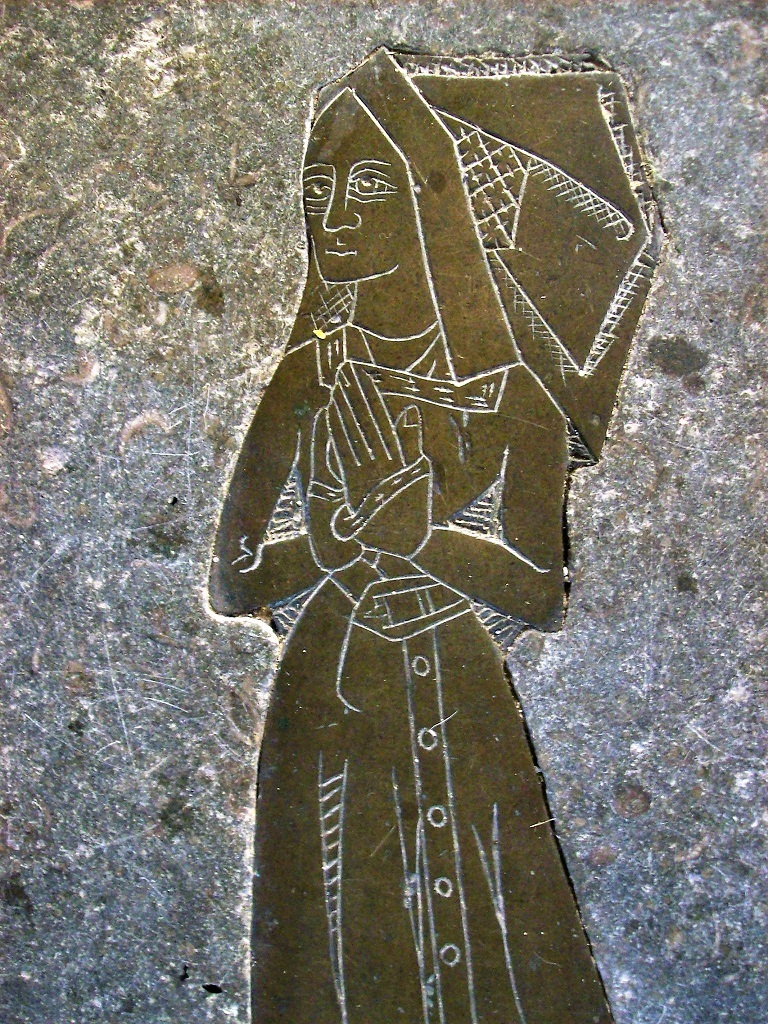
This brass commemorates Matilde Jayms and is dated 1499.
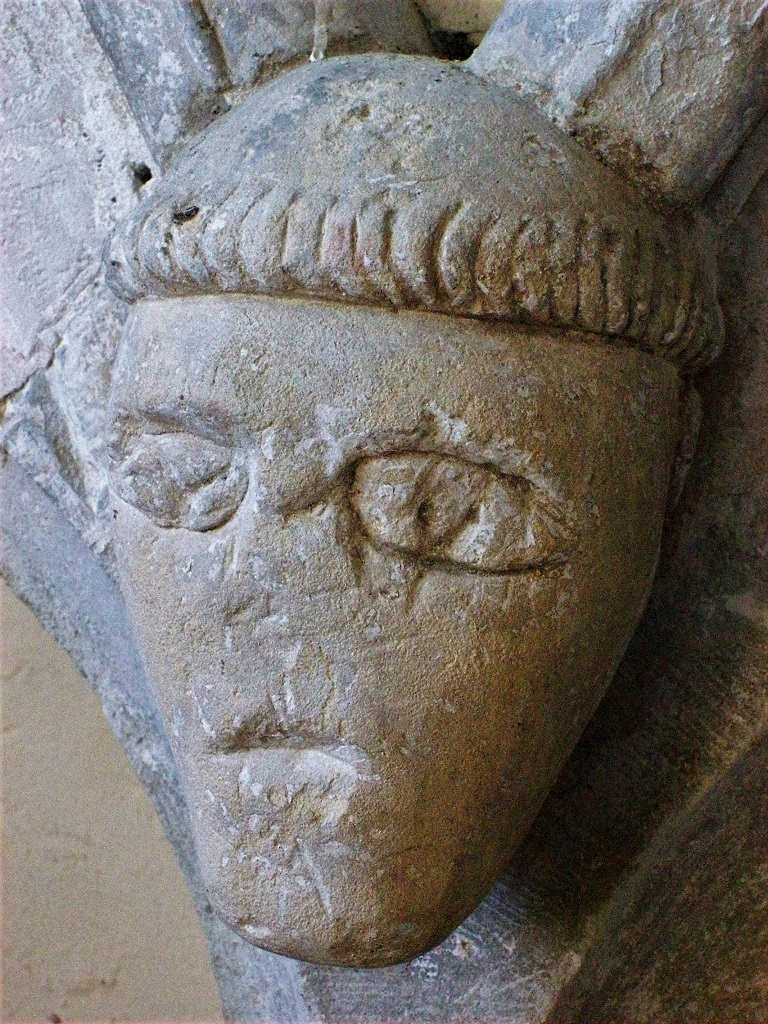
And this monk- as bald as John Davidson- decorates the sedilia. Thirteenth century? Yes, I think so.
I heard the South sing o'er the land.
I saw the yellow sunlight fall
On knolls where Norman churches stand.
I don't know exactly what route John Davidson took on his day trip to Romney Marsh, but St Mary in the Marsh is a Norman church and it stands on a knoll so it seems likely that the charabanc went past it.
Charabanc? No, that's unfair. Davidson was a late Victorian and late Victorian poets walked- and how! There was a romance attached to travelling folk- tinkers and gypsies and tramps. So let's imagine him on foot, perhaps with his dinner tied up in a handkerchief carried on a stick over his shoulder- and wearing some sort of a wide-brimmed hat. The hat is necessary, not only because everyone wore hats back them but also because Davidson was famously bald and the yellow sunlight would have done horrid things to his gleaming pate...
Sorry, I'm not sure why I'm poking fun. I suppose it's because Davidson was a little high flown- and sometimes wore a toupee. But he was a true poet. And a neglected one. Peace be on him.
St Mary the Virgin in St Mary in the Marsh is a lovely church. And largely unspoiled- as most of the Romney Marsh churches are. The Victorians did a bit of restoring but they kept it in bounds. Money was tight, I suppose, and they left the 18th century box pews and the floor tiles as they were- and forebore to fill the windows up with their assertive and insincerely pious stained glass. Here's a picture of the interior, looking east. It's wonderful to have an east window full of clear glass.
And some details:
This brass commemorates Matilde Jayms and is dated 1499.
And this monk- as bald as John Davidson- decorates the sedilia. Thirteenth century? Yes, I think so.

